RPM Services


RPM
Remote Patient Monitoring
Account Yourself
Remote patient monitoring is a technology that allows healthcare providers to monitor patients outside of the traditional clinical settings. It uses digital technologies to collect medical and other forms of health data from individuals in one location and electronically transmit that information securely to healthcare providers in a different location for assessment and recommendations. This technology has been used to monitor patients with chronic conditions such as diabetes, heart disease, and hypertension. It has been shown to improve patient outcomes and reduce healthcare costs by reducing hospital admissions and emergency room visits.


Why we monitor physiological data:
- To provide more data to physicians about the overall health condition of the patient helps in better diagnosis to deliver more efficient, higher quality, safer, personalized service, and care coordination.
- To provide structured health information to patients that empowers them to self-manage their conditions and make informed decisions about their treatment.
- To prevent severe, costly health outcomes in patients, particularly those with chronic conditions and help patients maintain their healthy lifestyle.
How data is monitored:
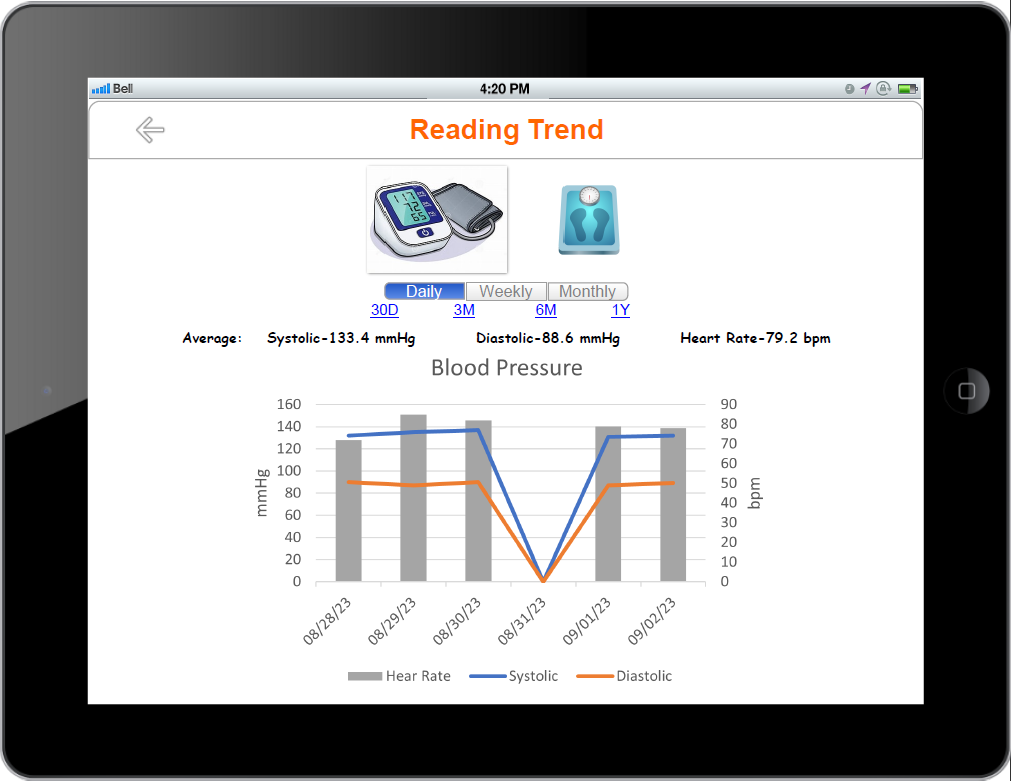
- Data from RPM devices utilized by patients is collected and uploaded into EHR system for caregivers to securely access in a HIPAA compliant environment.
- Patients are given access to secured health portals/apps for monitoring their incoming vitals regularly.
- Overall health status is reported through the dashboard displaying measured indicators, trends and alerts to both patient and caregivers.
What is monitored:
Account Yourself
Chronic conditions, such as cardiac diseases, diabetes, high blood pressure, obesity and asthma are monitored through the acquired patient body vitals data.
- Blood pressure cuffs are highly effective in managing several conditions such as diabetes, CHF, hypertension, and kidney dysfunction by measuring artery motion changes.
- A glucometer is a device that measures a patient’s blood glucose level by using a small drop of blood deposited on a test strip connected to its body. It is effective for patients with types 1 and 2 diabetes, who can measure (and consequently manage) their blood glucose levels.
- An ECG device is used to measure heart function. It is typically used for cardiovascular conditions such as coronary artery disease or arrhythmias.
- A pulse oximeter is a non-invasive clip attached to a patient’s finger to measure the blood oxygen level through light wavelengths. It helps assess any changes in a patient’s lung function. Patients with chronic lung and heart conditions can benefit from it.
Benefits
RPM can benefit patients and providers by enabling ongoing care, early intervention, lower costs, improved efficiency, enhanced convenience, better population health, reduce hospital admissions, promote patient engagement, and boost clinic workflow and revenue.

- Improved clinical decision making: RPM can provide providers with more data and insight on patients’ health status, trends, and responses to treatment, allowing them to adjust care plans accordingly and intervene proactively.
- Enhanced patient engagement: RPM can empower patients to take more control and responsibility for their own health, by providing them with feedback, education, reminders, and support. RPM can also increase patient satisfaction and trust in their providers.
- Reduced cost of care: RPM can lower the cost of care by decreasing hospital admissions, readmissions, length of stay, and emergency department visits. It can also reduce travel expenses, administrative costs, and staff workload for both patients and providers.
- Increased access to care: RPM can expand the reach of care to patients who live in remote areas, have mobility issues, or face other barriers to access. It can also improve the availability and convenience of care by allowing patients to receive care at home or on the go.
- Boosted net patient revenue: RPM can increase the revenue for providers by creating new sources of reimbursement, enhancing staff productivity, improving workflow efficiency, and attracting more patients. It can also provide a competitive advantage for providers who offer RPM services.
- Healthcare Analytics: Through the data collected, anomalies in a patient’s health can be isolated and addressed before their next appointment. In traditional scenarios (without RPM), a patient may end up in the emergency room or worse if the anomaly is not caught in time.
Advantages
Account Yourself
Some of the key advantages in using RPM systems include:
- Data Encryption: RPM systems use encryption technologies to protect patient data as it is transmitted over the internet or other networks.
- Authentication and Access Control: RPM systems use strong authentication methods to ensure that only authorized users can access patient data granted based on the patient consent.
- Compliance with Regulations: RPM systems comply with regulations and standards such as Health Insurance Portability and Accountability Act (HIPAA), and state specific privacy and data protection laws.
- Care Coordination: RPM system provides information to facilitates end-to-end care coordination workflow that benefits both the patient and the provider by keeping both informed to create a safe and effective care plan.

Devices
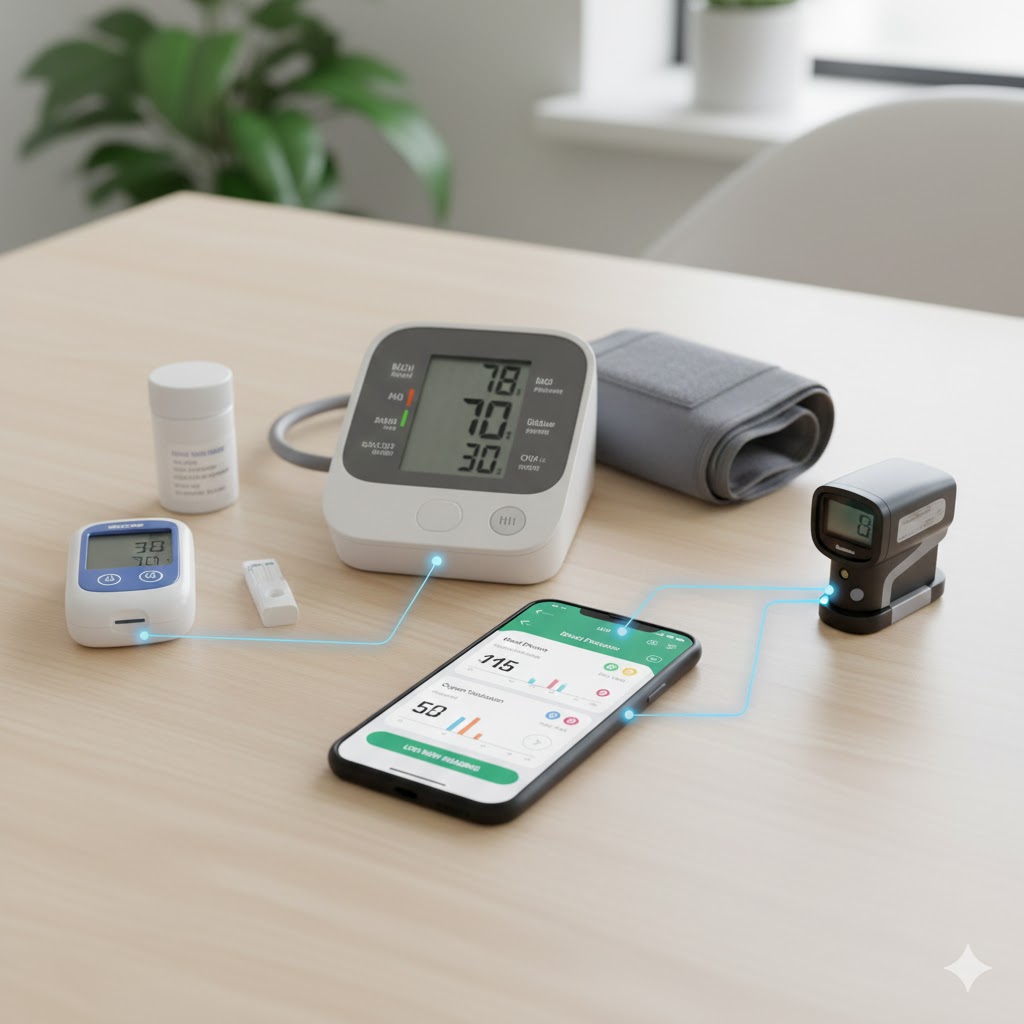
RPM devices powered with a Bluetooth module communicate with the patient’s mobile app that collects the data from the device and uploads to a secured cloud server. Devices powered by 4G/5G cellular will directly transmit the data to the server. Some devices can also transmit data in real-time or allow for video interactions between the patient and provider.
Glucose monitors
These devices measure the blood sugar levels of patients with diabetes and can remind them to take their insulin. They can also send the data to the provider for monitoring and management.
Blood pressure cuffs
These devices are wrapped around the arm and can measure the systolic and diastolic pressure and pulse rate. They can help manage hypertension and prevent cardiovascular diseases.
Pulse oximeters
These devices are clipped to the finger or earlobe and can measure oxygen saturation and pulse rate. They can help monitor respiratory conditions, such as asthma, COPD, or COVID-19.
Weighing scales
These devices are placed on the floor and can measure the body weight and body mass index. They can help monitor obesity, malnutrition, or fluid retention.
ECG
These devices are placed on the chest and can record the electrical activity of the heart or the sounds of the heart and lungs. They can help diagnose and treat cardiac or pulmonary conditions.
Workflow
Account Yourself
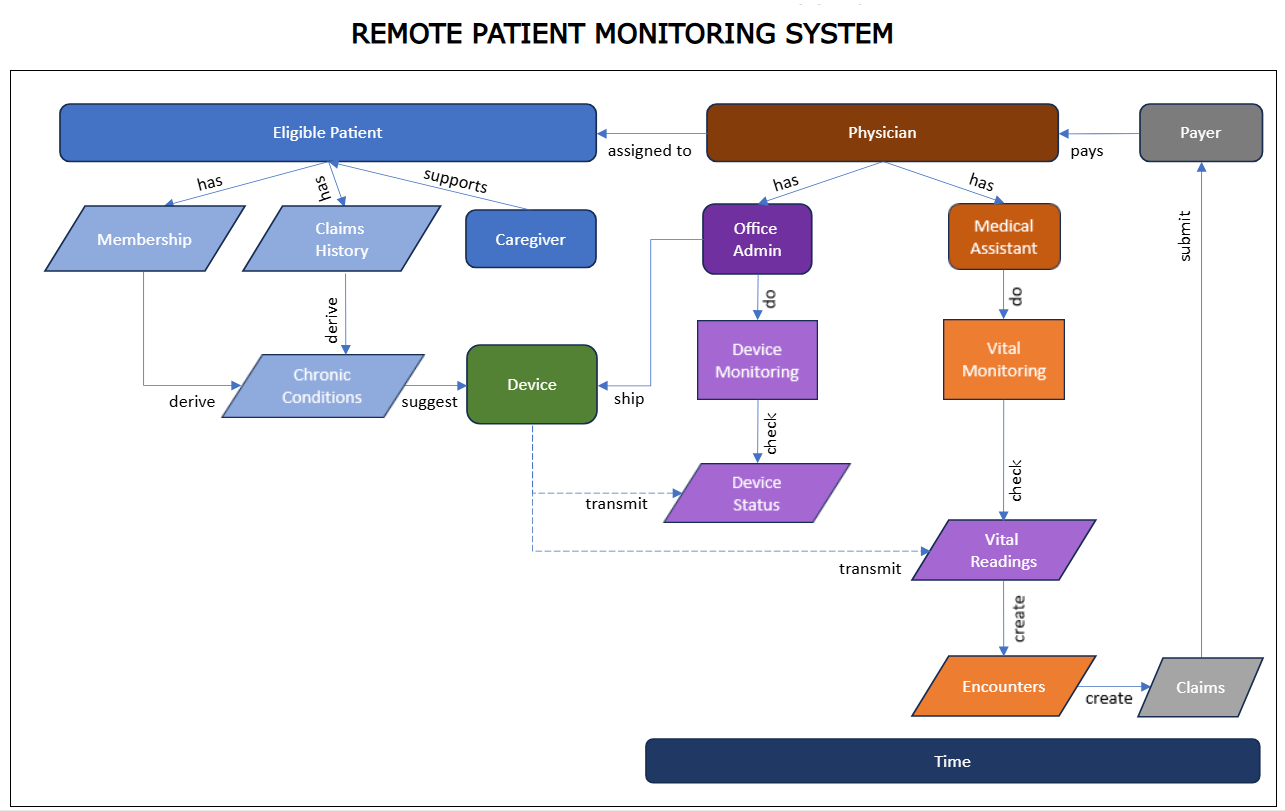
- Patient Identification: identify patients who would be good candidates for RPM based on patient’s history of illness.
- Eligibility Verification: check for the patient’s active insurance (MCR MGD) plan that covers RPM services.
- Patient Outreach: Call patients to educate them about RPM program and its benefit for better health outcomes.
- Scheduling for patient onboarding: Execute the patient onboarding either remotely or in-person depending on patient availability.
- Device Shipping: Ensure secure shipping and tracking of the device until reached to the patient in good condition.
- Patient Vitals Monitoring: The Non-physicians (CNA, CMA, CNS, PA, MA) will access the data through a web portal or an app and analyses it for monitoring and intervention. Providers will also communicate relevant data-driven insights and interventions to patients. Monitor incoming vital data to reach-out to patient who missed readings and increase patient adherence to improve patient outcomes. Note: All reimbursement regards remote monitoring of physiological parameter(s) by clinical staff incident to the billing practitioner’s professional services
- Coding & Billing: RPM specific CPT codes (99453, 99454, 99457, 99458) include reimbursement for both collection and interpretation of physiologic data from devices (e.g., scales, pulse oximeters, blood pressure cuffs, etc.). CMS also requires data from devices to be collected and transmitted electronically to bill for these codes, i.e., data cannot be self-reported by the patient.
- Program Status Review: Reports for monthly review meetings with providers to walkthrough on program analytics & revenue status.
Trends
Some of the key advantages in using RPM systems include:
RPM is expected to grow in the future, as more patients and providers adopt telehealth solutions and as more evidence emerges on its effectiveness and impact.
According to Insider Intelligence, by 2025, more than a quarter of the U.S. population (70.6 million people) will use RPM tools in their healthcare. To avoid readmission penalties, many healthcare providers are giving patients tablets and RPM devices when they leave the hospital, so they can monitor them remotely. For example, the University of Pittsburgh Medical Centre cut its readmission risk by 76% and boosted its patient satisfaction to over 90% with this strategy.
RPM solutions are likely to become more popular in the future, along with telehealth visits. RPM solutions can help patients with acute or chronic conditions to manage their health more easily and proactively, without waiting for their next in-person appointment. They can also help healthcare providers save money by reducing ER visits and readmissions, as they can monitor patients’ vitals and symptoms at home.